

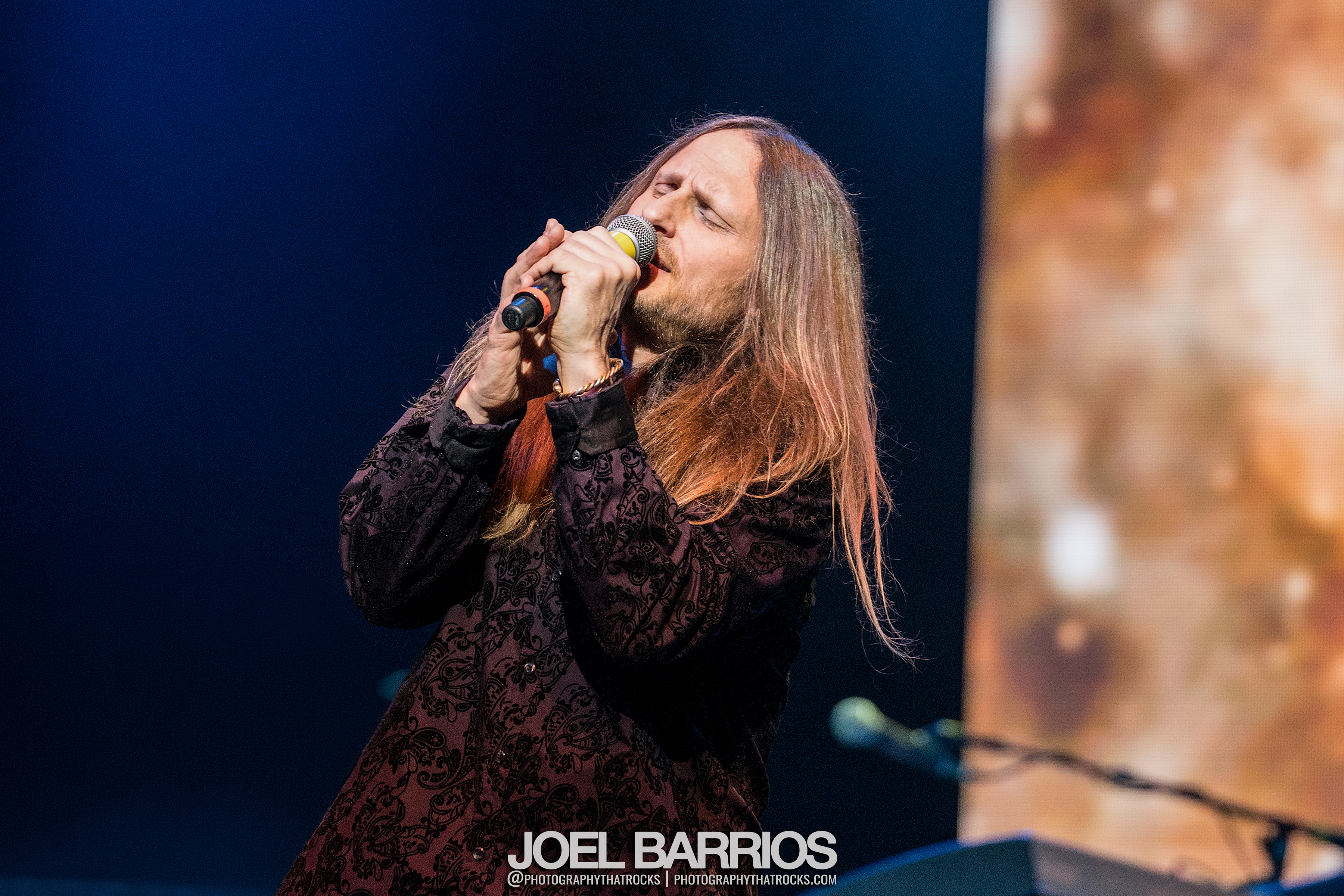
When Jon Davison joined Yes in 2012, he came in green, riding the momentum of his work with Glass Hammer and holding onto the belief that things with the Heaven and Earth album would come together. They didn’t, at least not the way anyone hoped.
“What we released at best are just polished demos that make up that album,” Davison said in a conversation with Scott Medina. The culprit, in his telling, was producer Roy Thomas Baker, who was in a difficult period personally and, as Davison put it with characteristic generosity, “sort of lost the plot. We were left without a captain running the ship.”
From there, the band fell into touring mode for years. Davison collaborated with guitarist Steve Howe on a record called Love Is, contributed to Arc of Life with bassist Billy Sherwood and drummer Jay Schellen, and waited. Then Howe decided the band should make a record on their own terms — no outside producer, no personality conflicts — and COVID arrived right on cue to clear everyone’s schedule.
“That was the silver lining for all that troubled time,” Davison said.
The result was The Quest, the first of what has since become a trilogy of self-produced albums recorded at Howe‘s studio in the English countryside, with engineer Curtis Schwartz as the steady hand at the board. Mirror to the Sky followed, and now there is Aurora, the most fully realized of the three. Davison credits the run of studio albums with giving the band something that years of touring had never quite managed: a real sense of each other.
“On tour, you’re just in this survival mode. Even though we have a communication on stage, it’s more unspoken communication,” he said. “So it’s great to really get to know each other. Steve and I have grown as a really tight unit, friendship-wise.”

That closeness has had a direct effect on how Davison contributes to the music. On earlier records, he was primarily a vocalist, arranger by necessity. On Aurora, he is a genuine writing partner: playing keyboards and electric guitar on several tracks, co-writing with Howe and others, and receiving the kind of creative trust that takes years to build.
“Steve was really open more and more on the last album, but especially now on Aurora, where I could say, ‘I’ve got this electric guitar idea’ or organ, and I just had that support and confidence behind me,” Davison said. “It’s been a period of discovery, self-discovery through branching out and writing and exploring other instruments.”
On the title track, for instance, Davison plays a church organ section in 7/4 time during a stretch where Howe takes a jazz-inflected solo, while keyboardist Geoff Downes layers his own organ line across the choruses. It is, Davison noted with a laugh, very much a kitchen-sink approach. His overall keyboard contribution across the album runs to roughly 20 percent, with Downes handling the bulk.
Two of the album’s most thematically pointed tracks are “Emotional Intelligence” and “Turnaround Situation,” both of which Davison described as partly confessional. The first came from his research into psychology and his realization that emotion and intellect are not opposites but can be integrated: a concept he said genuinely changed how he sees his own behavior.
“I’ve been everything but emotionally intelligent. And I’ve suffered as a result and I’ve wanted to learn from those experiences,” he said. “I wanted to share that with other people. And I thought, well, this is Yes music — what a perfect platform for that type of subject matter.”
The broader backdrop to those songs is a creeping unease about the state of the world, and specifically, a concern that people have stopped listening to each other: “I’m sensing a rising tension in the world for myriad reasons. You have to start with yourself and realize that really giving in is also winning. If you can give close to equal importance to somebody else’s needs as your own, that brings balance. And if you’re willing to give, you’re going to create good karma where others will give to you.”
On the lighter end, the album’s bonus track “Jambustan” gives Davison a rare chance to stretch out into pure fun. The word is a Caribbean term he picked up while living in Barbados: slang for aggressive, rogue driving behavior. The song’s chorus is built on a string of “don’ts” that Davison described as tongue-in-cheek life advice, consciously modeled on John Lennon‘s habit of affirming something positive through a negative.
“I put my Lennon hat on. It’s such a diversion from more of the loftiness of most Yes lyrics, which I adore and I live by. But how fun to do something quirky like that.”
“Ariadne” pulls in the opposite direction: a storytelling piece rooted in Greek mythology that Davison said connects to childhood memories of listening to those stories in school. The rest of the album’s lyrical territory falls somewhere between the two: personal, occasionally cosmic, always searching.
As for the band’s future beyond Howe, Davison was measured but clear. “I sort of live by that proverb of Rick Wakeman‘s where there will always be a Yes. And Chris was adamant about that.” He pointed out that the current lineup is the longest-standing in the band’s history and said the goal is simply to keep it intact as long as everyone wants to.
He is under no illusions about where he stands in the minds of some fans. He knows the comparisons to Jon Anderson are constant, knows some people will never fully come around, and said Hawkins gave him the only advice he needed on that front early on.
“He said, ‘Never look at the comments.’ And you know, even he was going through that.”
Davison has made his peace with the position. “The stars have aligned to put me in a place where I represent the vocals in Yes. And so I’ve been called to duty, if you will. I go out there, and I celebrate Yes music and I do it for the people and to respect the legacy.”
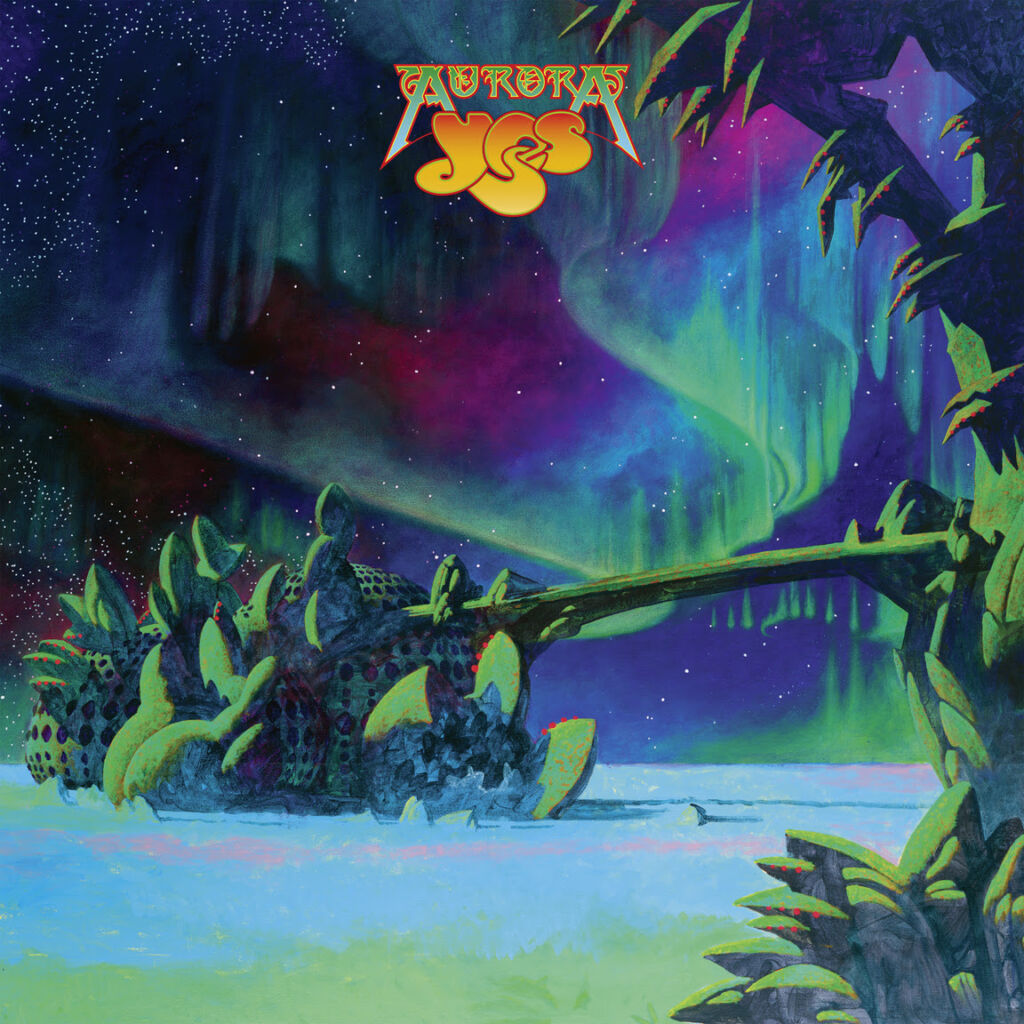
Aurora is out June 12 via InsideOut Music.